Posts

Showing posts with the label vegetables

Geylang Serai and Joo Chiat - Market, Traditional Food, Malay Emporium

Image
Once known as the Malay Emporium of Singapore and although it was developed later than the more glamorous and historical Kampong Glam , Geylang Serai has long been associated with the Malay ethnic community of Singapore with history of the area dated back to early 19th century. It is one of the oldest Malay settlements in Singapore. Located between Changi Road and Sims Avenue, the main attraction of the greater Geylang Serai is the busy Geylang Serai Market, affectionately known amongst the Malays as Pasar Lama (old market). Pasar Baru (new market) is the opposite building called Joo Chiat Complex, which was completed in 1985 on the site of the former Changi Market. Designed like a traditional Malay house, Geylang Serai Market comprises two storeys consisting of a wet market on the ground floor and a cooked food or hawker centre on the upper floor. It was first opened in 1964 by the first prime minister of Singapore Lee Kwan Yew. It was redeveloped in 2009 and reopened in 2010. It is ...
Little India - Colourful Traditional Market, Food, with Tekka and Mustafa Centre

Image
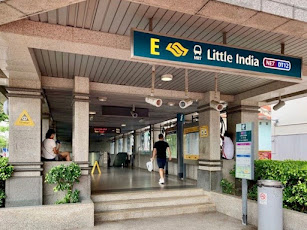
Many associated Little India with Mustafa Centre, the huge 24-hour department store that sells almost anything. Yes, they practically sell everything including electronics, jewellery, shoes and fresh produce. And we all know of someone who would dash to Mustafa Centre to get that last-minute travel luggage. Other than Mustafa Centre, another well-known landmark in Little India is without doubt Tekka Centre or Market and the Arcade. Although not part of the original Raffles Town or Jackson Plan, like the ethnic areas of Kampong Glam and Chinatown , the well-preserved Little India in Singapore evolved through trade-related activities and remain a magnet of all things that represent the Indian culture and heritage of Singapore. The area was developed around agriculture and cattle trading in the 19th century. Common traditional trades include garland-making, goldsmithing, and fortune-telling. Indian goldsmiths are prominent, as gold jewelry is culturally significant. Walk along Serangoon ...

Lontong - a hearty Malay dish

Image
Lontong is a popular traditional malay dish, which can be eaten anytime, during breakfast, lunch, even dinner. The dish comprised of compressed rice cakes with curry-ish gravy (sayur lemak or lodeh) whose ingredients include vegetables such cabbage (lots of it), long beans, fried tofu, carrots, and egg. The rice cakes or boiled compressed rice are similar to soto ayam or ketupat found in satay dish, except lontong is roundish due to the shape of the banana-leaf wrapped rice inside the metal mould, though these one can find the pre-cooked version in supermarkets and sundry stores. Sambal chilli or chilli paste is optional too for those who wants the added zest. But what is lontong without the sambal right? The sambal tend to be of the sweeter type, not the spicy sambal belacan type. Do you notice the serunding? Lontong would not be complete without the serunding! Serunding is the golden brown fried coconut flakes. You can get lontong like the one shown here for about $4.50. Egg is opt...

Mee soto and Soto ayam

Image
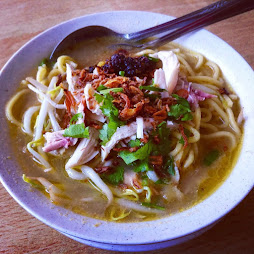
Mee soto is a spicy chicken noodle soup commonly found in Singapore, Malaysia and Indonesia. Mee means noodles. The spiciness depends on how much black-ish color chili you put in your noodles. This hot chili topping is optional, to add zest to the taste. If you have been to Indonesia, you probably would have come across soto. Soto originates from Indonesia, which is a soupy dish of broth, meat and vegetables. Simple yet delicious. Mee soto The main ingredients of mee soto are yellow Hokkien noodles, bean sprouts and slices of chicken ( ayam ) sprinkled with fried shallots and some mint leaves. The soup or gravy contains coriander and lemongrass that gives it a unique fragrant smell and taste. The noodles may also come in thinner rice vermicelli type. Mee soto can be found in many hawker centres or food courts and sells for between $3.50 to $4.50. This noodle is usually sold by Malay stall holders. Cheap, spicy, good and tasty! The yellow noodles are similar to the ones in mee rebus ,...

Popiah (Spring Roll) - delicious snacks or appetisers

Image
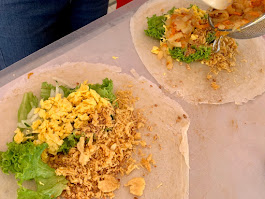
Popiah or spring roll. It can be the whitish wet version or the brownish deep-fried ones. These spring rolls are popular local delicacies. The ingredients can include but not limited to eggs, prawns, turnip, carrots, peanuts, lettuce, parsley, garlic, bean sprout, sweet sauce, chilli paste (the quantity of chilli paste depends on the spiciness that you want it to be) that are wrapped in popiah skin which is paper thin wheat flour to hold all or some of these ingredients! Many people think it is the skin that makes or break a popiah. And the filling of vegetables, seafood, eggs and chilli, which is optional, need to be well-drained before being tightly rolled or wrapped. The popiah still need to be moist but not soggy. Some vendors will add a dash of crushed peanut bits to make it crispy. Kway Guan Huat Popiah at Joo Chiat You can get popiah at most hawker or food centres . The popiah can be the deep-fried version or the wet types, depending on personal preference. You can get a wet ty...

Singapore fried bee hoon and mee goreng - favourite noodles dishes

Image
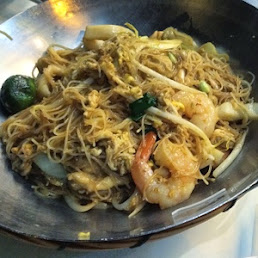
Singapore fried noodles or bee hoon is well known all over the world. In many cities you will find a restaurant or a stall selling the famous Singapore fried noodles. You can find a stall in a London airport selling this popular Singapore noodles. Rice vermicelli cooked in garlicky white or the spicier reddish version. Bee hoon is sometimes also called as mee hoon . Same dish, different spellings. Bee (mee) hoon Ingredients may include seafood such as prawns or slices of fish, eggs, chicken and vegetables. Not forgetting cut limau kasturi or small limes for that added zest. Small lime squeezed to noodles is similar to squeezing lemon to salmon for a bit of tanginess. A plate of fried bee hoon or noodles typically cost $4 to $5 depending on if you get them at hawker cntres or air-conditioned food-courts. At some stalls you can even get them for only $3 like at pasar malam or the night bazaar or at economy stall in a food-court. Though at that price, do not expect much protein li...