Posts

Showing posts from 2018

Lontong: A Hearty Malay Classic

Image
Plus Singapore-style recipe you can make at home Singapore Food & Culture A classic bowl of lontong sayur lodeh — comforting, filling, and unmistakably Singaporean. Lontong is a beloved traditional Malay dish in Singapore — rich, comforting, and versatile enough for breakfast, lunch, or dinner. At its heart, it's a simple combination of compressed rice cakes served in a fragrant, coconut-based vegetable curry known as sayur lodeh or sayur lemak . What Goes Into a Bowl of Lontong? The star of the dish is the lontong itself — rice compressed into a firm cake, traditionally cooked inside a banana-leaf-lined cylindrical mould. This gives the rice its characteristic roundish shape, unlike the square ketupat you might find with satay. These days, pre-cooked lontong is readily available at supermarkets and sundry shops. The gravy is a mild, creamy coconut curry loaded with vegetables: Cabbage (in generous amounts) ...
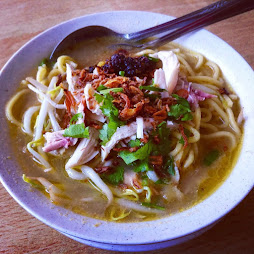
Mee soto and Soto ayam

Image
Mee soto is a spicy chicken noodle soup commonly found in Singapore, Malaysia and Indonesia. Mee means noodles. The spiciness depends on how much black-ish color chili you put in your noodles. This hot chili topping is optional, to add zest to the taste. If you have been to Indonesia, you probably would have come across soto. Soto originates from Indonesia, which is a soupy dish of broth, meat and vegetables. Simple yet delicious. Mee soto The main ingredients of mee soto are yellow Hokkien noodles, bean sprouts and slices of chicken ( ayam ) sprinkled with fried shallots and some mint leaves. The soup or gravy contains coriander and lemongrass that gives it a unique fragrant smell and taste. The noodles may also come in thinner rice vermicelli type. Mee soto can be found in many hawker centres or food courts and sells for between $3.50 to $4.50. This noodle is usually sold by Malay stall holders. Cheap, spicy, good and tasty! The yellow noodles are similar to the ones in mee rebus ,...

Free Outdoor Fitness Corners, Budget Gyms and Therapeutic Gardens in Singapore

Image
Singapore is packed with free outdoor fitness corners, therapeutic gardens, and ultra-cheap public gyms — no membership contract required. Whether you want to do pull-ups under the trees, jog along the beach, or lift weights in an air-conditioned community gym for the price of a kopi, this guide covers budget-friendly option across the island. Table of Contents 1. Free Outdoor Fitness Corners 2. Therapeutic Gardens 3. ActiveSG Gyms ($2.50/entry) 4. Community Centre Gyms 5. Safety & Comfort Tips 6. Quick Comparison 1. Free Outdoor Fitness Corners Fitness corners are all-weather, outdoor gym areas built by the government and located in nearly every housing estate and major park. Most are open 24/7 and feature elderly-friendly equipment — elliptical walkers, seated arm cyclers, massage rollers — alongside standard pull-up bars and suspension trainers. The best part? They are completely free. Manay of these fitness centres are located side-by-side wit...

Exploring the $2 stores in Singapore

Image
Budget Stores in Singapore: Daiso, Miniso & Beyond If you're hunting for affordable household essentials, beauty products, or quirky knick-knacks in Singapore, Japanese-inspired budget stores are a treasure trove. While the iconic "$2 store" era has evolved, these shops remain unbeatable for bargain hunters. 🏬 The Daiso Story: From $2 to $2.18+ Daiso Japan put the "$2 store" concept on the map in Singapore. For years, every item in the store was a flat $2 — from clothes hangers and drinking glasses to cleaning products, kitchen accessories, flashlights, stationery, travel gear, gardening tools, arts and crafts supplies, beauty products, socks, and phone cables. Even reading glasses were just two dollars. Current pricing (2026): Daiso Singapore now uses a tiered pricing system. Most items range from $2.18 to $5.30 , with premium products going higher. Whi...

Potong Ice Cream: Singapore's $2 Slice of Happiness

Image
Singapore Food & Culture There are few things more satisfying in Singapore's relentless heat than biting into a potong ice cream — a thick, rectangular slab of frozen goodness wedged between two crisp wafers or folded into a slice of rainbow-colored bread. It costs no more than $2. (Well it used to be a dollar or so.) It takes seconds to serve. And it might just be the most underrated dessert in the city. 📍 Quick Navigation What Is Potong? The Flavors Where to Find Them Why It Matters Yam flavoured potong ice-cream with wafer biscuits — simple, square and delicious! What Is Potong? Potong means "cut" in Malay, and that's exactly what you get: a generous slice cut from a large block of ice cream, then sandwiched in your choice of wafer or soft, pillowy bread. No cones, no cups, no frills. The result is handheld, portable, and gloriously messy — the kind of treat you eat while walking, sweating, and smiling. The bre...

Popiah: Singapore's Favourite Hand-Rolled Snack

Image
Singapore Food & Culture Popiah is one of Singapore's most beloved street foods — a paper-thin wheat flour crepe wrapped around a savoury filling of vegetables, seafood, and condiments. It comes in two distinct styles: the fresh "wet" version (soft, pale, and uncooked) and the deep-fried version (golden, crisp, and shatteringly crunchy). 🥬 What's Inside? A good popiah is all about balance. The filling typically includes: Jicama (bang kuang) — the star ingredient, slow-cooked until tender Carrots and bean sprouts — for texture Eggs — usually scrambled or thinly omeletted Prawns — optional, but common in premium versions Lettuce, parsley, and garlic — for freshness and aroma Crushed peanuts — for a nutty crunch Sweet sauce and chilli paste — the flavour backbone The filling must be well-drained before rolling. A soggy popiah is a failed popiah — it should be moist and flavourful, but never wet enough to seep through t...