Posts

Showing posts with the label rice

Pandan, Kantan and Blue Pea - from ditches to culinary dishes

Image
Have you ever wondered where the fragrant green colour in your kaya toast comes from? Or what gives rojak that unique zing? Often referred to as the 'Vanilla of the East', the pandan is a tropical plant commonly found across Southeast Asia and of course Singapore. It is an upright, green shrub with woody aerial roots and fan-shaped sprays of blade-like leaves. Traditionally, these leaves were woven into baskets used for cooking rice and meats. Popular local coconut milk rice dish, nasi lemak, has pandan-ish fragrance, with the pandan leaves tied into knots and cooked together with the rice. Putu piring, a Malay snack, also use small pieces of pandan leaves as garnish. And we all know the fluffy and greenish pandan chiffon cake! Wild pandan Botanically called pandanus amarylifolius from the pandanus family, the pandan leaves have been used to flavour or colour desserts such as cakes and sweet beverages. The leaves are pounded and strained (or blended with a little water) to y...

Mee Rebus and Mee Siam: Two Iconic Local Noodle Dishes

Image
Two of Singapore's most beloved noodle dishes — mee rebus and mee siam — sit side by side on hawker stall menus across the island. One is thick, sweet, and hearty; the other tangy, spicy, and light. Both are affordable, deeply satisfying, and quintessentially Singaporean. Here is everything you need to know about these two classics, from what goes into the gravy to where to find the best bowls. 📋 Quick Facts Mee Rebus "Boiled noodles" — thick yellow noodles in sweet-spicy gravy Mee Siam "Siamese noodles" — thin rice vermicelli in tangy, sour gravy Origin Malay & Peranakan (Straits Chinese) Typical price (2026) $3.50 – $5.50 at hawker centres; $7+ with satay or at cafés Where to find Virtually every hawker centre and food court in Singapore 🍜 Mee Rebus: The Hearty Classic Literally "boiled noodles" — mee being the Hokkien word for noodles and rebus the Malay word for boiled — mee rebus is a delicious d...

Satay with ketupat and peanut sauce

Image
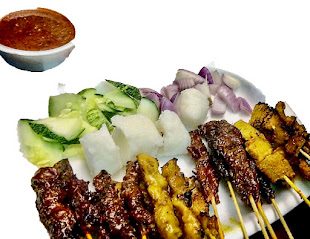
Barbequed marinated or seasoned meat on stick that some may likened like kebab. Meat is usually mutton , beef or chicken. Less common ones are babat (beef tripe) or prawn. Satay dipped in peanut sauce. Eaten with ketupat or rice cubes and slices of cucumbers and onions. The ketupat rice cubes (shaped like squarish cubes as can be seen in the below photo) are not glutinous rice but rice cakes packed traditionally in diamond-shaped woven palm leaf pouch then cut into rice cubes. The ketupat taste is similar to rice cakes in gado-gado , soto ayam or lontong . Thought to be originally from Indonesia, satay is commonly found in South-East countries such as Indonesia, Malaysia, Brunei and of course Singapore. You can find satay in most hawker or food centres and they are usually sold by the Malays. (L-R) Beef, chicken, mutton and babat (tripe) satay My favourite satay meat is mutton. Some may not like the smell of mutton, but I love mutton satay! When you put the meat, rice cube, cucumber ...

Bedok Food Centre (Bedok Corner) - Once Kampong Bedok

Image
Bedok Food Centre is a hawker centre affectionately known as Bedok Corner . Simply because it is located at the corner of Bedok Road and Upper East Coast Road. A compact place with 31 stalls where you can find and taste traditional local delicacies such as satay , ayam penyet , laksa , rojak , bubur kampong (kampong style porridge), sup kambing (mutton soup), mee soto , chicken rice, char kway teow, gado-gado, Hokkien mee, roti john and snacks such as banana or chempedak fritters, epok-epok or curry puffs. There is a popular local dessert cheng teng stall, a few seafood stalls that sell the perennial seafood dishes such as the spicy sambal stingray, cumi sotong (squid) and sambal lala. Bubur is congee or porridge and kampong means village. Chempedak is artocarpus integer , in the same family as jackfruit. Bedok Food Centre a.k.a. Bedok Corner The words food centre and hawker centres are used interchangeably, and they basically mean the same. In many countries the term hawker c...

Lontong - a hearty Malay dish

Image
Lontong is a popular traditional malay dish, which can be eaten anytime, during breakfast, lunch, even dinner. The dish comprised of compressed rice cakes with curry-ish gravy (sayur lemak or lodeh) whose ingredients include vegetables such cabbage (lots of it), long beans, fried tofu, carrots, and egg. The rice cakes or boiled compressed rice are similar to soto ayam or ketupat found in satay dish, except lontong is roundish due to the shape of the banana-leaf wrapped rice inside the metal mould, though these one can find the pre-cooked version in supermarkets and sundry stores. Sambal chilli or chilli paste is optional too for those who wants the added zest. But what is lontong without the sambal right? The sambal tend to be of the sweeter type, not the spicy sambal belacan type. Do you notice the serunding? Lontong would not be complete without the serunding! Serunding is the golden brown fried coconut flakes. You can get lontong like the one shown here for about $4.50. Egg is opt...

Mee soto and Soto ayam

Image
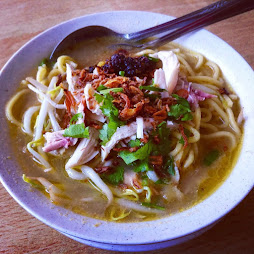
Mee soto is a spicy chicken noodle soup commonly found in Singapore, Malaysia and Indonesia. Mee means noodles. The spiciness depends on how much black-ish color chili you put in your noodles. This hot chili topping is optional, to add zest to the taste. If you have been to Indonesia, you probably would have come across soto. Soto originates from Indonesia, which is a soupy dish of broth, meat and vegetables. Simple yet delicious. Mee soto The main ingredients of mee soto are yellow Hokkien noodles, bean sprouts and slices of chicken ( ayam ) sprinkled with fried shallots and some mint leaves. The soup or gravy contains coriander and lemongrass that gives it a unique fragrant smell and taste. The noodles may also come in thinner rice vermicelli type. Mee soto can be found in many hawker centres or food courts and sells for between $3.50 to $4.50. This noodle is usually sold by Malay stall holders. Cheap, spicy, good and tasty! The yellow noodles are similar to the ones in mee rebus ,...

Singapore fried bee hoon and mee goreng - favourite noodles dishes

Image
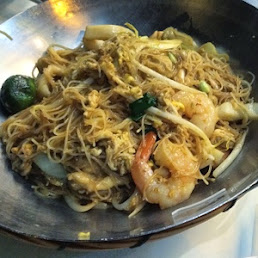
Singapore fried noodles or bee hoon is well known all over the world. In many cities you will find a restaurant or a stall selling the famous Singapore fried noodles. You can find a stall in a London airport selling this popular Singapore noodles. Rice vermicelli cooked in garlicky white or the spicier reddish version. Bee hoon is sometimes also called as mee hoon . Same dish, different spellings. Bee (mee) hoon Ingredients may include seafood such as prawns or slices of fish, eggs, chicken and vegetables. Not forgetting cut limau kasturi or small limes for that added zest. Small lime squeezed to noodles is similar to squeezing lemon to salmon for a bit of tanginess. A plate of fried bee hoon or noodles typically cost $4 to $5 depending on if you get them at hawker cntres or air-conditioned food-courts. At some stalls you can even get them for only $3 like at pasar malam or the night bazaar or at economy stall in a food-court. Though at that price, do not expect much protein li...